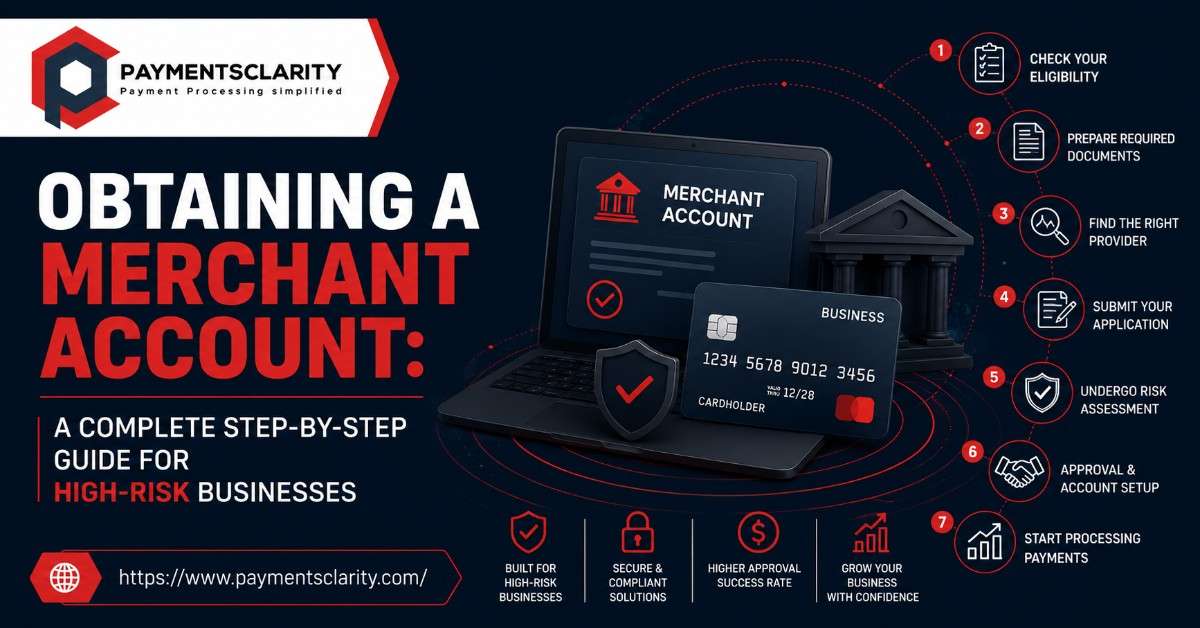
Obtaining a Merchant Account: A Complete Step-by-Step Guide for High-Risk Businesses
In today’s digital economy, obtaining a merchant account is one of the most important moves any business can make. Whether you’re launching a startup or scaling an established operation, a merchant account enables you to accept payments securely and efficiently — the backbone of any successful online or in-person business.
But for companies in high-risk industries like adult entertainment, CBD, or gaming, the process of obtaining a merchant account comes with unique challenges. This guide walks you through every step, so you can approach the process with clarity and confidence.
What Is a Merchant Account — and Why Does It Matter?
A merchant account is a special type of business bank account that allows you to accept credit card and electronic payments from customers. Without one, your business simply cannot process the transactions that drive revenue.
For high-risk businesses, obtaining a merchant account requires working with a processor that understands the specific compliance, chargeback, and risk considerations of your industry — which is why choosing the right partner matters enormously.
Step 1: Understand Your Business Needs
Before starting the application process, take stock of what your business actually requires:
- What products or services are you selling?
- Who is your target audience, and where are they located?
- What is your expected monthly transaction volume?
- Do you need multi-currency or offshore capabilities?
High-risk businesses must pay special attention here. Processors that work with standard retail businesses may not be equipped — or willing — to serve industries with elevated chargeback rates or regulatory complexity.
Step 2: Research the Right Payment Processors
Not all payment processors are created equal. When obtaining a merchant account for a high-risk business, look for providers that offer:
- Credit card processing
- Cryptocurrency payment support
- eCheck processing
- Offshore merchant account services
- Dedicated fraud prevention tools
- Competitive, transparent rates
Providers like Payments Clarity are purpose-built for high-risk industries, offering the full suite of services above — unlike general processors such as Square or Stripe, which may lack offshore support or eCheck capabilities depending on your business type.
Feature | Payments Clarity | Square | Stripe |
Credit Card Processing | ✅ | ✅ | ✅ |
Cryptocurrency Payments | ✅ | ❌ | ✅ |
eCheck Processing | ✅ | ✅ | ❌ |
Offshore Merchant Account | ✅ | ❌ | ✅ |
Competitive Rates | ✅ | ✅ | ❌ |
Dedicated Support | ✅ | ✅ | ✅ |
Step 3: Gather Your Documentation
Once you’ve identified the right processor, prepare your application documents. Most providers will require:
- Government-issued photo ID
- Business registration certificate
- Recent bank statements (typically 3–6 months)
- Proof of business address
- Business website or sales platform URL
High-risk applicants may additionally need to provide business licenses, compliance certifications, or processing history from a previous merchant account. Having these ready upfront can significantly speed up the approval timeline.
Step 4: Submit Your Application
With your documents prepared, submit your application through your chosen processor’s portal or with the help of their onboarding team. A few tips to keep in mind:
- Double-check that all information is accurate and consistent — discrepancies can cause delays or rejections.
- Be transparent about your industry — trying to obscure your business type often backfires during underwriting.
- Don’t hesitate to reach out to support if you have questions about specific fields.
Step 5: Navigate the Underwriting Process
The underwriting stage is where the payment processor formally assesses the risk profile of your business. This typically involves a review of:
- Your personal and business credit history
- Your business model and website
- Previous processing history (if applicable)
- Chargeback ratios and any prior terminations
For high-risk businesses, underwriting is more thorough — but that’s not a barrier. Processors like Payments Clarity are experienced in underwriting high-risk accounts efficiently, balancing due diligence with timely approvals. Once approved, you’ll receive your merchant account credentials and can begin processing.
Step 6: Integrate Your Payment Gateway
After obtaining a merchant account, the next step is integrating your payment gateway — the technology that connects your website or checkout process to the payment network. Your processor will typically provide:
- A hosted payment page or API integration
- Support for multiple payment methods (cards, crypto, eChecks)
- SSL encryption and tokenization for secure transactions
- Developer documentation or a dedicated integration team
A properly integrated payment gateway ensures your customers enjoy a smooth, secure checkout experience — which directly impacts conversions and trust.
Step 7: Monitor, Optimize, and Protect
Obtaining a merchant account is not a one-time task — it’s the start of an ongoing relationship with your payment infrastructure. Best practices include:
- Reviewing transaction reports regularly for unusual activity
- Using fraud prevention tools provided by your processor
- Monitoring chargeback rates and addressing disputes promptly
- Optimizing your checkout flow to reduce cart abandonment
Many high-risk processors offer dedicated chargeback management services and real-time alerts — tools that are invaluable for maintaining your account in good standing.
Why High-Risk Businesses Should Choose a Specialist Processor
General-purpose processors can shut down accounts with little notice when a business is flagged as high-risk. Working with a specialist like Payments Clarity from the outset means:
- Your account is built for your industry from day one
- You get dedicated support from people who understand your compliance environment
- You have access to offshore accounts and crypto payment rails if needed
Rates are competitive and transparent — no hidden fees
Final Thoughts
Obtaining a merchant account doesn’t have to be a frustrating or opaque experience. By understanding your needs, choosing the right processor, preparing your documents carefully, and actively managing your account after approval, you can build a payment infrastructure that supports long-term growth.
For high-risk businesses especially, partnering with the right processor from the start is the single most important variable in the process. Payments Clarity exists precisely to make that partnership straightforward, supportive, and built for your success.
General FAQs
The basic requirements for obtaining a merchant account typically include a government-issued photo ID, a registered business entity, recent bank statements (3–6 months), proof of business address, and an active business website. High-risk businesses may also need to provide industry-specific licenses, compliance certifications, or previous processing history. Having all documents prepared in advance helps speed up the approval process significantly.
The timeline for obtaining a merchant account varies depending on your industry and the completeness of your application. For standard businesses, approval can take 1–3 business days. For high-risk businesses, the underwriting process is more thorough and may take anywhere from 3 to 10 business days. Working with a specialist processor like Payments Clarity — one that is experienced with high-risk industries — can help streamline underwriting and reduce unnecessary delays.
Yes, a previous rejection does not permanently disqualify you from obtaining a merchant account. Rejections often occur because businesses apply to processors that are not equipped to serve their industry. If you operate in a high-risk sector such as CBD, adult entertainment, or gaming, your best path forward is to apply through a specialized high-risk payment processor. Being transparent about your business model, addressing prior chargeback issues, and providing complete documentation all significantly improve your chances of approval.
When obtaining a merchant account, common fees to look out for include setup or application fees, monthly maintenance fees, per-transaction processing rates (typically a percentage plus a fixed amount), chargeback fees, and in some cases early termination fees. High-risk merchant accounts may carry slightly higher processing rates due to the elevated risk profile of the industry. Always review the full fee schedule before signing — a reputable processor like Payments Clarity will provide transparent, competitive pricing with no hidden charges.
Not necessarily. Some full-service payment processors support both traditional card payments and cryptocurrency transactions under a single merchant account setup. When obtaining a merchant account with a provider like Payments Clarity, you can access credit card processing, eCheck processing, and cryptocurrency payment support in one integrated solution. This simplifies your payment infrastructure and reduces the administrative overhead of managing multiple accounts across different providers.