Payment Gateway For Website: 5 Must-Have Features That Actually Matter
Let’s be real — when a customer reaches your checkout page, the last thing you want is for them to hesitate. One confusing step, one security warning, or one missing payment option, and they’re gone. That’s why choosing the right payment gateway for your website isn’t just a technical decision — it’s a business-critical one.
Whether you’re launching your first online store or scaling an established brand, here are five features you genuinely need to look for.
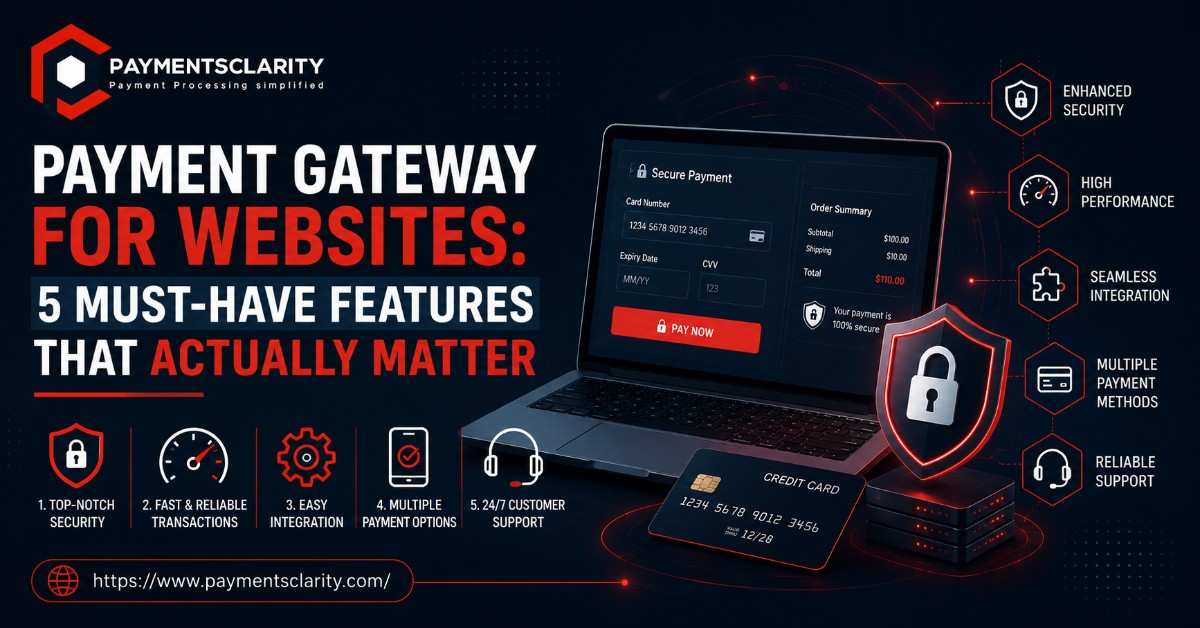
1. Security That Your Customers Can Actually Feel
Nobody enters their card details on a website they don’t trust. And honestly? They shouldn’t have to.
A solid payment gateway for your website needs to go beyond basic protection. Here’s what that looks like in practice:
- PCI DSS Compliance is non-negotiable. This is the global standard for handling card data securely, and any gateway worth considering should meet it fully — not just partially.
- Strong encryption (AES-256) scrambles sensitive data so that even if it’s intercepted, it’s completely unreadable. Think of it as a lockbox that only the right parties can open.
Fraud prevention tools should be working quietly in the background on every single transaction — checking things like:
- How frequently transactions are being made from the same source (velocity checks)
- Whether the billing address matches what the card issuer has on file (AVS)
- That extra three-digit code on the back of the card (CVV verification)
- A one-time password sent to the cardholder before a transaction is approved (3D Secure Authentication)
When customers feel safe, they buy with confidence. It’s that simple.
2. A Checkout Experience That Doesn’t Get in the Way
Here’s something most business owners don’t hear enough: a slow or clunky checkout costs you money every single day.
A great payment gateway for your website should make the buying process feel effortless — not like filling out a tax form. That means:
- Multiple payment options:- Credit and debit cards are just the starting point. Offer e-wallets like PayPal and Apple Pay, buy-now-pay-later options, and even Open Banking transfers. The more choices you give customers, the fewer reasons they have to leave.
- One-click checkout for returning customers:- Let people securely save their payment details so they’re not re-entering their card number every time. This alone can meaningfully lift your repeat purchase rate.
- Mobile-first design:- More than half of online shopping happens on a phone. Your payment gateway needs to look and work perfectly on small screens — including support for Google Pay and Apple Pay tap-to-pay.
- Guest checkout:- Not everyone wants to create an account just to buy something. Give first-time buyers a frictionless path to purchase.
And if you’re selling internationally, make sure your gateway handles multiple currencies and languages natively. Showing a customer their total in a foreign currency they don’t recognize is a fast way to lose the sale.
3. Reporting and Analytics That Actually Tell You Something Useful
Your payment gateway isn’t just a transaction tool — it’s a data goldmine, if you know how to use it.
The best gateways give you access to:
- Full transaction histories — every purchase, with the date, amount, payment method, and customer details logged clearly. This makes reconciliation far less painful.
- Customer behavior insights — things like average order value, how often people buy, which products are most popular, and what payment methods your audience prefers.
- Real-time dashboards — so you can see what’s selling right now, catch abandoned carts as they happen, and keep a clear eye on your cash flow without waiting for end-of-month reports.
This kind of visibility turns guesswork into decision-making. You start spotting patterns, fixing problems early, and allocating your resources where they’ll actually make a difference.
4. Integrations That Slot Into Your Existing Setup
The best payment gateway for your website is one that works with the tools you already rely on — not against them.
Look for native integrations with:
- Your shopping cart platform — so checkout data flows automatically without manual workarounds
- Your accounting software — so bookkeeping and reconciliation happen with minimal effort on your end
- Your CRM — so every transaction enriches your customer profiles and helps you personalize future interactions
When your systems talk to each other seamlessly, you spend less time on admin and more time on what actually moves your business forward.
5. Scalability That Keeps Up With Where You’re Headed
The gateway that works well for 50 orders a week might buckle under 5,000. And the one that’s fine for domestic sales might not be built for international expansion.
Think ahead when making your choice:
- Can it handle your projected transaction volume without slowdowns or failures?
- Does it support the currencies and compliance requirements of the markets you want to enter?
- If your business moves into higher-risk territory, does it offer specialist merchant account options?
Choosing a flexible, scalable solution now saves you the headache of switching platforms later — which is costly, time-consuming, and disruptive to your customers.
The Bottom Line
Picking the right payment gateway for your website comes down to five things: ironclad security, a smooth checkout experience, insightful data, smart integrations, and room to grow. Get those right, and you’re not just processing payments — you’re building the kind of trust and convenience that keeps customers coming back.
If you’re ready to upgrade your payment infrastructure, Payments Clarity offers tailored solutions including international payment gateways and specialized merchant accounts. Reach them at hello@paymentsclarity.com or +447466507219.
General FAQs
A payment gateway for a website is a technology that securely connects your online store to a customer's bank or card issuer. When a customer hits "pay," the gateway encrypts their payment details, sends them to the payment processor for approval, and then confirms the transaction — all within a matter of seconds. Think of it as the digital equivalent of a card reader in a physical shop, just running invisibly behind your checkout page.
The best payment gateway for a small business website depends on your specific needs — your sales volume, target audience, and the countries you sell to. That said, the non-negotiables remain the same regardless of size: PCI DSS compliance, multiple payment options, mobile-friendly design, and straightforward pricing. Start by shortlisting gateways that integrate easily with your existing platform and offer clear transaction fees without hidden charges.
Yes — provided you choose a reputable provider. A trustworthy payment gateway uses AES-256 encryption, complies with PCI DSS standards, and employs fraud detection tools like 3D Secure Authentication and CVV verification to keep card data protected. Your customers' details are never stored in a readable format, making it extremely difficult for bad actors to access them even in the unlikely event of a breach.
Absolutely. Many modern payment gateways are built with international selling in mind. Look for features like multi-currency support, dynamic currency conversion (so customers see prices in their local currency), and multilingual checkout pages. You'll also want to confirm that your chosen gateway complies with the payment regulations of the specific countries or regions you're targeting.
Costs vary depending on the provider, but most payment gateways charge a combination of a setup fee, a monthly subscription fee, and a per-transaction fee (typically a small percentage plus a fixed amount per sale). Some gateways have no monthly fee but charge slightly higher transaction rates. It's worth calculating your expected monthly sales volume and comparing the total cost across a few providers — the cheapest upfront option isn't always the most economical at scale.