If you run a business in Doncaster, from a market trader to a growing online shop shipping across the UK, you've probably noticed how much of your day goes on waiting for money. Card payments take a few days to land. Bank transfers need someone to type in sort codes and hope nothing's wrong. Invoices sit unpaid.
Open banking offers a quicker, simpler route. This guide explains what it is, how local businesses and customers can start using it, and what to check along the way. One honest note up front: "instantly" depends on your setup. Some steps take minutes, while others, like onboarding with a provider, take a little longer.
Open banking lets customers pay you directly from their bank account through a secure, regulated connection, without typing card or account details. To start in Doncaster, choose an FCA-authorised open banking payment provider, connect it to your website, invoicing tool, or payment link, test a payment, and then offer it to customers. Payments often arrive within seconds to minutes when both banks support faster payments.
What is open banking, in simple terms?
Open banking is a UK system, introduced through regulation, that lets you securely share your bank data or start a payment through a regulated third party, with your permission. You're always in control: you approve each action in your own banking app, and you can withdraw consent.
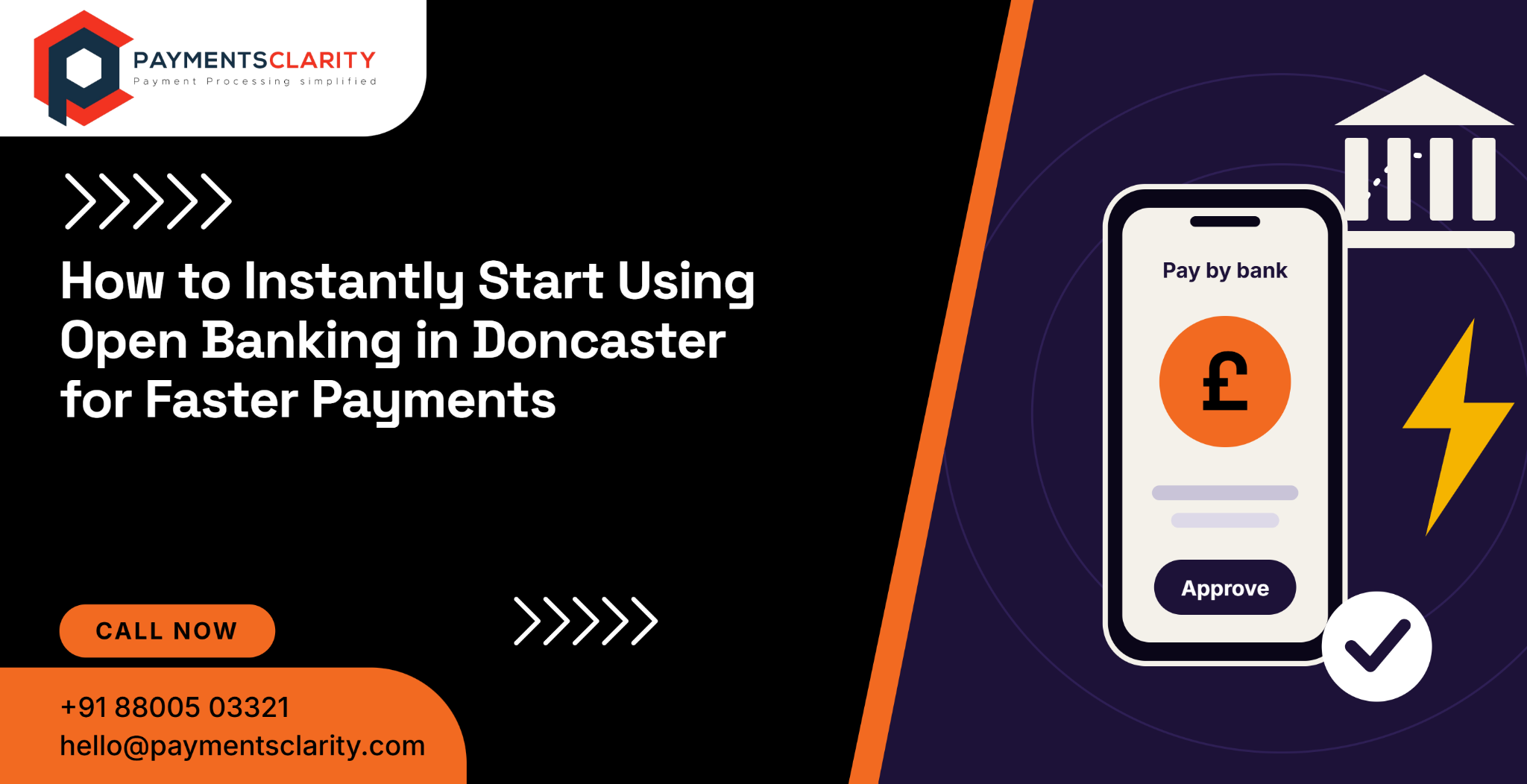
For payments, it works like this:
- The customer picks "pay by bank" at checkout or on an invoice.
- They choose their bank.
- They're taken to their own banking app or website to approve the payment.
- The payment goes straight from their account to yours, usually over the Faster Payments network.
- You're notified once it's been initiated or completed.
No card number is typed. No bank details are copied by hand. And in many cases, it costs merchants less than a card payment, though pricing varies by provider.
Why does open banking matter for Doncaster businesses?
Quicker cash flow. Faster Payments transfers typically arrive within seconds to minutes, rather than the multi-day delays often seen with cards.
Lower costs. Account-to-account payments can carry lower fees than card acceptance, which matters when margins are tight.
Fewer failed or disputed payments. Because the customer approves each payment in their bank, there's less scope for card-related chargebacks, though you should still have a clear refund policy.
Better security. Payments are authenticated by the customer's bank, which uses strong authentication.
Growing adoption. The UK is one of the most advanced open banking markets in the world, with well over ten million active users reported in recent industry data. Your customers are likely more familiar with it than you think.
Who benefits most locally?
- Tradespeople and service businesses who invoice and chase payment
- Independent shops and cafés with online ordering
- Landlords and letting agents collecting rent or deposits
- Clubs, charities, and community groups collecting subscriptions and donations
- Online sellers wanting a lower-cost checkout option
- Professional firms such as accountants and solicitors collecting fees
How do you start? A step-by-step guide
Step 1: Decide where you'll use it
Pick one starting point: an online checkout, payment links sent by email or text, invoices, or in-person QR codes. A single use case gets you running quickly.
Step 2: Choose an authorised provider
Look for a provider authorised or registered by the Financial Conduct Authority for payment initiation services. You can check the FCA register yourself, and it only takes a minute. Ask about fees, payout speed, supported banks, and customer support.
Step 3: Complete onboarding
Expect to provide business details, ownership information, and bank account details for payouts. Some providers approve small businesses quickly, while others take a few days, especially if they run extra checks.
Step 4: Connect it to your setup
Options typically include:
- A plugin for your online store platform
- Hosted payment pages and shareable links, which need no coding at all
- An API for custom websites and apps
- Integration with accounting tools to match payments to invoices automatically
If you're not technical, payment links are the quickest way to begin.
Step 5: Run a test payment
Send yourself a small payment from your own bank account. Check that the funds arrive, the reference matches, and your notification works.
Step 6: Tell your customers
Add "Pay by bank" at checkout, on invoices, and on your website. A short explanation helps: "Pay securely from your bank app. No card details needed."
Step 7: Review and refine
After a few weeks, look at how many customers use it, what it saves you, and where people drop out. Adjust the wording and placement accordingly.
What should customers know?
If you're a customer paying a Doncaster business this way, keep these points in mind:
- Check the details before approving. Confirm the amount and the business name in your own banking app.
- Only approve payments you started.
- Understand your protections. Account-to-account payments don't carry the same chargeback rights as cards, though other protections and bank processes may apply. If something goes wrong, contact your bank promptly.
- Don't share online banking passwords. Genuine open banking journeys never ask for them outside your bank's own login.
What are the limitations?
Open banking isn't perfect for every situation:
- Customers need to use a bank that supports it, although most major UK banks do.
- Some people prefer cards for the built-in dispute protections.
- Limits on transaction size can apply.
- Recurring payments are developing, with variable recurring payments expanding in the UK, but availability differs by provider and bank.
That's why many businesses offer open banking alongside cards rather than replacing them.
What does it cost?
Pricing varies. Some providers charge a flat fee per transaction, others a small percentage, and some include monthly fees. Compare total cost across your expected volumes, and ask about payout speed and any minimums. The cheapest headline price isn't always the best deal once you factor in reliability and support.
Quick checklist for Doncaster businesses
- Provider is FCA authorised, and you've checked the register
- Fees and payout times understood
- Payment link or checkout option created
- Test payment completed
- Refund process written down
- Customers informed on invoices and your website
- Reconciliation set up with your accounts
A simple example for a local business
Say a Doncaster tradesperson finishes a job on a Friday afternoon. Instead of posting an invoice and waiting, they text a payment link to the customer. The customer taps it, picks their bank, approves in their app, and the money is on its way within moments. No chasing, no card machine, no typing sort codes at the doorstep.
For a business that lives on cash flow, saving a week or two of waiting adds up quickly.
Frequently asked questions
What is open banking and how does it work for payments?
It lets customers pay directly from their bank account through a regulated provider. They approve the payment in their banking app and the money moves bank to bank, usually within seconds to minutes.
Is open banking safe?
Providers are regulated, customers authenticate with their own bank, and no card details are shared. As with any payment method, use reputable providers and stay alert to scams.
Can small businesses in Doncaster use open banking?
Yes. Many providers offer simple payment links and plugins aimed at small businesses, with no need for custom development.
Are open banking payments really instant?
Often they arrive within seconds or minutes over Faster Payments, but timing depends on the banks involved and any limits or checks.
Do I still need to accept cards?
Most businesses do. Offering both gives customers choice and reduces the risk of lost sales.
Key takeaways
- Open banking lets customers pay straight from their bank, quickly and securely.
- Doncaster businesses can start with payment links or a simple plugin.
- Always check that your provider is FCA authorised.
- Offer it alongside cards for the broadest reach.
Thinking about faster payments for your business?
Before choosing a provider, it helps to know what you're likely to qualify for. Request a no-obligation pre-approval check with PaymentsClarity and take the guesswork out of your next step.
Need clarity on your payment options?
Speak with Payments Clarity about your business model, target markets and payment requirements.
Talk to our team ↗