
Top Online Payment Gateway Provider in Singapore
Top Online Payment Gateway Provider in Singapore Searching for the best payment gateway provider in Singapore? Payments Clarity is a trusted name for businesses that need fast acceptances, multi-currency support, and safe online payments. Singapore is one of Asia’s top financial hubs, and finding the right payment gateway providers in Singapore can directly inncrease your sales, customer trust, and business growth. Whether you run an e-commerce store, a SaaS platform, or a high-risk business, Everything you need to know about the top payment gateways in Singapore is covered in this guide What Is a Payment Gateway and Why Does It Matter for Payment Gateway Providers in Singapore How a Payment Gateway Works A payment gateway in Singapore securely transfers money from a customer’s bank account to a merchant’s account. It serves as a bridge between your website and the bank. When a customer clicks “Pay Now,” the payment gateway encrypts the payment data, verifies the card details, and either approves or declines the transaction within seconds. The Monetary Authority of Singapore (MAS) regulates all payment platforms that businesses use in Singapore under the Payment Services Act 2019. Every payment processor must hold a valid MAS licence before it can provide payment services. Always verify a provider’s MAS licence before signing up. Singapore’s Digital Payment Market — Key Numbers Singapore’s digital payment market is growing fast. According to Statista (2024), the total payment value reached USD 42.7 billion, with projections showing USD 64.3 billion by 2028. These numbers reflect how important it is to choose the right online payment gateway in Singapore for your business today. Singapore ranks 3rd in Asia-Pacific as a fintech hub (Global Fintech Index 2024) Over 85% of Singapore residents make digital payments regularly E-commerce penetration stood at 78% in 2024, making e-commerce payment gateway Singapore solutions critical More than 50% of cross-border Singapore merchants need multi-currency support Key Features to Look For in a Payment Gateways in Singapore Multi-Currency and Cross-Border Payments Singapore is an international trade hub. The best payment gateways in Singapore support not just SGD, but also USD, EUR, GBP, AUD, and 100+ other currencies. Payments Clarity supports over 150 currencies, making it one of the most capable online payment platforms Singapore businesses can rely on for global payments. Support for High-Risk Businesses Most standard online payment gateway Singapore providers only work with low-risk industries like retail or food delivery. If your business operates in a high-risk category, you need a dedicated high-risk payment gateway Singapore provider that understands your needs and has the right banking relationships. Payments Clarity specialises in high-risk merchant accounts. Industries they support include: Online casinos and gaming platforms Forex and cryptocurrency trading IPTV subscription services Adult content platforms Nutraceuticals and supplements Travel and ticketing businesses Easy Integration with WooCommerce & Websites If you use WordPress or WooCommerce to run your online store, you need a woocommerce payment gateway Singapore solution that connects easily without complex coding. Payments Clarity supports WooCommerce, Shopify, Magento, and custom API integrations — so you can start accepting payments quickly. Clear Pricing with No Extra Fees When you do a payment gateway Singapore comparison, always check the full fee structure. Some providers charge setup fees, monthly minimums, or hidden chargeback fees. Payments Clarity offers clear, upfront pricing. The Merchant Discount Rate (MDR) is communicated clearly before you sign any contract. Payments Clarity: The Best Online Payment Gateway in Singapore About Payments Clarity Payments Clarity is a London based payment solution provider that serves merchants globally, including businesses that need dependable payment gateway providers Singapore. They operate at paymentsclarity.com and offer end-to-end obtaining solutions – from merchant account setup to ongoing payments management. Their key strength is working with both mainstream and high-risk businesses. With direct relationships with over 50 obtaining banks, they offer one of the highest approval rates between all credit card payment gateway Singapore providers. Main Benefits & Features 50+ obtaining bank relationships for better approval rates 85%+ merchant approval rate — even for high-risk categories PCI DSS Level 1 certified — the highest security standard globally 3D safe 2.0 authentication built into every payments 150+ currency support with multi-currency settlement Real-time dashboard for payments monitoring and reporting Dedicated 24/7 relationship manager for every merchant Advanced chargeback management and dispute resolution tools Fast onboarding — merchant account approved in 48 to 72 hours Comparing Top Payment Gateways in Singapore Feature Payments Clarity Stripe PayPal Adyen High-Risk Merchants Yes No Limited Limited Multi-Currency (150+) Yes Yes Yes Yes WooCommerce Support Yes Yes Yes Yes Chargeback Protection Advanced Basic Basic Moderate Merchant Approval Time 48–72 hrs Instant Instant 3–5 days Dedicated Support 24/7 Manager Email Only Email/Chat Account Mgr High-Risk Approval Rate 85%+ N/A N/A N/A How to Choose the Right Online Payment Platform in Singapore Match the Gateway to Your Business Type The right online payment platforms Singapore businesses choose depends greatly on their industry and model. Here is a simple breakdown: E-commerce stores: Prioritise WooCommerce or Shopify compatibility and fast checkout flow SaaS and subscription businesses: Look for recurring billing and automatic renewal support High-risk merchants: Choose a dedicated high risk payment gateway Singapore provider like Payments Clarity Enterprise businesses: Negotiate volume-based pricing and custom settlement terms Check Government Licences & Security Standards Every online payment gateway Singapore provider must comply with MAS regulations under the Payment Services Act. Before choosing, verify: MAS Payment Institution licence (valid and current) PCI DSS certification level (Level 1 is the highest) GDPR compliance for any European customer data AML (Anti-Money Laundering) procedures in place Payments Clarity meets all of these standards, making it one of the safest and most compliant payment gateway providers Singapore businesses can partner with. What to Look for in Credit Card Processing A dependable credit card payment gateway in Singapore must support all major card networks — Visa, Mastercard, American Express, and UnionPay. Payments Clarity accepts all of these, including premium corporate cards. Tokenisation and 3DS2 authentication ensure that every card payment is safe and compliant with global standards. Why
Top 10 Payment Gateways in Malaysia (2026)
Top 10 Payment Gateways in Malaysia (2026) Malaysia’s digital payments market is accelerating at a pace few industries match. According to Mordor Intelligence, the Malaysian payments market was valued at USD 262.5 billion in 2025 and is projected to reach USD 494.9 billion by 2031, registering an 11.15% compound annual growth rate (CAGR). Statista projects Malaysia’s digital commerce transaction value at USD 27.97 billion in 2025, growing to USD 54.83 billion by 2029. Fuelling this growth: Bank Negara Malaysia’s (BNM) Financial Sector Blueprint 2022–2026 has made digital payments a national priority. According to BNM’s 2024 Annual Report, Malaysians made approximately 409 e-payments per capita in 2024 — up sharply from prior years. Retail e-payment transactions reached RM 698.1 billion in 2024, a 17% rise from RM 592 billion in 2023. Choosing the wrong payment gateway in Malaysia directly costs you revenue. Whether you run an e-commerce store, a SaaS platform, or a high-risk business with global customers, the gateway sitting between your checkout and your customer’s bank determines conversion rates, settlement times, and total cost of processing. This guide cuts through the noise with verified, source-backed data on the top 10 payment gateways in Malaysia, how they work, and which one deserves serious consideration for your business in 2026. How Payment Gateways Work in Malaysia A payment gateway is a secure digital intermediary that transmits payment data between the customer, the merchant, and the banking networks involved. When a buyer completes a checkout — whether on your website, mobile store, or physical counter — the gateway encrypts the transaction data, communicates with the relevant bank or payment network, and confirms whether the payment is approved or declined. In Malaysia, the payment infrastructure has two unique pillars that any online payment gateway in Malaysia must support: FPX (Financial Process Exchange): Operated by PayNet, a subsidiary of Bank Negara Malaysia, FPX is a real-time internet banking payment system that lets customers pay directly from their savings or current accounts. According to BNM’s own data, FPX consistently accounts for the highest share of e-commerce transaction volume in Malaysia — surpassing both credit and debit cards. DuitNow: Also operated by PayNet, DuitNow is Malaysia’s interoperable QR payment standard. Customers scan one QR code using any participating bank app or e-wallet, with PayNet handling the back-end routing. The full transaction flow — step by step: The buyer selects a payment method at checkout (card, FPX/DuitNow, e-wallet). The payment gateway encrypts the transaction data and may tokenise card numbers to reduce exposure. The encrypted data is sent to the acquiring bank, which forwards it to the card network (Visa, Mastercard) or to account-to-account rails such as DuitNow Online Banking/Wallets. The issuing bank verifies the customer’s balance and authentication. Approval or decline is returned through the same chain in seconds. The merchant receives settlement — timing varies from same-day (for some local gateways) to 5 business days (for international platforms). Regulatory compliance matters: Any payment service provider operating in Malaysia must be licensed or registered with Bank Negara Malaysia. Providers handling fund transfers must hold a licence under the Money Services Business Act 2011, while merchant acquirers must be registered under the Financial Services Act 2013. Using an unlicensed provider exposes your business to regulatory risk. Advantages of Having a Payment Gateway in Malaysia Before diving into the Malaysia payment gateway comparison, here is why getting this infrastructure right pays off: Conversion rate protection. Malaysian consumers are highly accustomed to FPX, DuitNow QR, and local e-wallets. A checkout that does not offer these options loses sales at the final step. Digital wallets held a 34.92% share of Malaysia’s e-commerce payments in 2025, according to Mordor Intelligence. Security and fraud prevention. A PCI DSS-compliant gateway handles encryption, tokenisation, and 3D Secure authentication on your behalf — protecting you from chargebacks and data breaches. Multi-channel flexibility. Modern gateways support web checkouts, mobile apps, invoices, payment links, and POS systems from a single integration. Cross-border access. Malaysia’s e-commerce sector is estimated to surpass USD 20 billion by 2025 (Verified Market Research, 2025). A gateway that supports multi-currency settlement allows you to capture international orders without separate processors for each market. BNPL readiness. The buy-now-pay-later segment in Malaysia is the fastest-rising payment slice, projected to grow at a 17.18% CAGR to 2031 (Mordor Intelligence). Gateways that integrate Atome, Grab PayLater, and ShopBack PayLater keep you ahead of this shift. Compliance coverage. BNM’s Consumer Credit Act 2025 introduced new rules around BNPL affordability checks and delinquency reporting. Working with a compliant, licensed gateway reduces your regulatory exposure automatically. Top 10 Payment Gateways in Malaysia Below is a source-backed breakdown of the leading gateways used by Malaysian businesses in 2026 — including global names, regional platforms, and specialist providers. 1. Worldpay Worldpay is one of the world’s most widely deployed payment processing platforms and is used by businesses across Malaysia seeking enterprise-grade global reach. According to Shopify’s published data, Worldpay’s e-commerce payment gateway operates in 150 countries and supports over 120 currencies, making it a practical option for Malaysian exporters and businesses with international customer bases. Key features for Malaysian merchants: Omnichannel payment processing — covers online transactions and POS systems within the same infrastructure Advanced reporting tools and customisable payment flows Accepts all major credit/debit cards, digital wallets, and a wide range of local payment methods 24/7 customer support in multiple languages No refund charges Free setup fee Considerations: Worldpay’s pricing is quote-based, and its subscription plan is denominated in GBP, which means the effective cost fluctuates with the MYR/GBP exchange rate. Its transaction fees are higher than dedicated local Malaysian gateways. Worldpay is best positioned for larger Malaysian businesses and enterprises that need a proven cross-border processing backbone rather than an SME-first domestic gateway. 2. iPay88 Founded in 2000, iPay88 is one of the most established names in Malaysia’s online payment gateway landscape. In 2025, iPay88 (then operating as Adaptis) was officially renamed to NTT DATA eCommerce Solutions Sdn. Bhd., strengthening its integration into NTT DATA’s global payment ecosystem and
High-Risk Payment Gateway: Deploying the Best Online Payment Practices
High-Risk Payment Gateway: Deploying the Best Online Payment Practices Operating in a high-growth, high-volume, or regulated industry comes with unique challenges. Traditional banks and standard processors often reject or abruptly shut down accounts they label volatile. To maintain stable operations, your business requires a robust high-risk payment gateway designed to handle increased chargeback vectors and complex regulatory frameworks. Deploying the best online payment practices ensures continuous revenue flow, protects financial data, and opens global markets. Why Your Business Needs a High-Risk Payment Gateway Standard payment processors operate on strict risk parameters. If your business experiences seasonal spikes, processes large ticket sizes, or operates in industries like gaming, travel, nutraceuticals, or crypto, standard providers present a point of failure. A single surge in chargebacks can freeze your funds instantly. A dedicated high-risk payment gateway bridges this gap. It provides the specialized infrastructure required to process volatile volumes safely. Rather than forcing your business to fit rigid underwriting guidelines, this specialized high-risk gateway adapts to your specific operational model, ensuring your checkout remains active even during processing anomalies. Advantages of Having a High-Risk Payment Gateway Implementing a tailored processing solution offers distinct operational advantages: Chargeback Mitigation: Built-in tools detect and flag fraudulent transactions before they settle, protecting your merchant standing. Global Expansion: An international high risk payment gateway allows you to accept multi-currency payments, breaking down geographic barriers for your customer base. Higher Processing Volumes: Scale your sales without triggering automatic fraud freezes or monthly volume caps. Alternative Order Channels: Access a high risk virtual terminal to securely input mail-order or telephone-order (MOTO) transactions directly into your system. How Are High-Risk Payment Gateways Different from Other Payment Gateways? The primary differences lie in risk tolerance, fee structures, and technical routing. Standard gateways pool merchants into aggregate accounts. When one merchant defaults, the entire pool faces scrutiny. In contrast, high-risk payment processors establish dedicated merchant accounts tailored to individual risk profiles. How does a high-risk payment gateway work to protect you? It utilizes intelligent transaction routing, load balancing across multiple acquiring banks, and customizable fraud scrubbing tools. Additionally, a standard provider might require 3D Secure (3DS) verification for every transaction, adding customer friction. A high-risk setup allows you to strategically leverage a 2d payment gateway model where appropriate, processing payments quickly without mandatory extra authentication steps, while balancing risk via secondary filters. How to Select the Best High-Risk Payment Provider for Your High-Risk Business? Selecting a partner requires rigorous evaluation. Avoid generic processors and evaluate candidates using these seven benchmarks. 1. Fee Rates That Are Clear and Transparent High-risk processing carries higher fees due to the inherent underwriting exposure. However, the best high-risk payment gateway provider will deliver structured pricing models tailored to specific verticals such as specialized High Risk Merchant Accounts for Casinos or high-volume e-commerce stores using stable tiered or interchange-plus pricing. Demand a full breakdown of setup fees, monthly maintenance fees, chargeback penalties, and rolling reserve percentages before signing any contract. 2. Investigate the Fraud Detection Programme A robust gateway must offer more than basic CVV checks. Look for real-time velocity checking, geographic IP filtering, and device fingerprinting. The goal of high risk online payment processing is to block malicious actors without rejecting legitimate buyers. 3. Avoid Misleading Advertisements Many processors promise “instant approval” or “zero rolling reserves” to secure contracts, only to freeze accounts during the first volume spike. Work exclusively with transparent best high-risk payment processors that outline real underwriting timelines and reserve requirements upfront. 4. Post-Sales Customer Service Support When a processing issue occurs, automated email bots are insufficient. Ensure your provider offers dedicated account managers who understand high-risk nuances and can assist immediately during technical disruptions or chargeback disputes. 5. Inquire About the Average Fund Processing Time Cash flow is critical. High-risk accounts frequently involve a rolling reserve (e.g., 5-10% of volume held for 180 days). Confirm the standard settlement schedule (e.g., T+3 or T+5) and ensure the reserve terms are clearly documented in your contract. 6. Software Compatibility for Digital Data Management Your gateway must integrate cleanly with your existing technical stack. If you run an e-commerce store, verify native integration options, such as a high risk payment gateway WooCommerce plugin, to avoid costly custom development work. 7. The Merchant Account Provider’s History Verify the provider’s relationships with acquiring banks. A reliable provider relies on a diverse network of domestic and international banking partners, ensuring your business has immediate redundancies if one bank shifts its risk appetite. Why Should You Choose Payments Clarity for a High-Risk Payment Gateway? Payments Clarity delivers stable, compliant, and scalable financial infrastructure for businesses operating in demanding industries. We do not offer one-size-fits-all templates; we engineer processing solutions aligned with your actual transaction profiles. Our network provides access to a dedicated high risk gateway merchant account, advanced fraud mitigation, and a secure high risk virtual terminal for MOTO operations. Whether you require a specialized high risk payment gateway uk setup for European markets, a low-friction 2d payment gateway, or seamless high risk payment gateway WooCommerce integrations, our infrastructure secures your transaction pipeline. Feature Payments Clarity Specification Core Infrastructure International high risk payment gateway with multi-currency settlement Account Type Dedicated high risk gateway merchant account (no aggregation) Integrations Native plugins including high risk payment gateway WooCommerce Alternative Channels Secure, compliant high risk virtual terminal for phone/mail orders Geographic Optimization Specialized routing for high risk payment gateway uk and global regions Conclusion: Secure Your Revenue Before It’s at Risk Relying on a standard payment processor for a high-risk business model leaves your revenue vulnerable to sudden disruptions. Partnering with experienced high-risk payment processors stabilizes your cash flow and protects your business from sudden account closures. Secure your processing pipeline today. Contact Payments Clarity to deploy a resilient financial framework. Website: https://www.paymentsclarity.com/ Email: hello@paymentsclarity.com Phone: +91-88005 03321 General FAQs Can high-risk businesses use Stripe or PayPal? No. Sourced from Payment Nerds (2026), CardCorp (2025), and Vendo Services (2025), which document Stripe’s prohibited industry list and the 90-day fund-hold risk that follows termination.
Payment Gateway for Online Casino
How to Choose a Secure Payment Gateway for Online Casino Transactions Finding a safe Payment Gateway for Online Casino Transactions comes down to checking a few critical security pillars. Because online gaming involves real money and sensitive data, a reliable gateway must act like a digital vault. First, ensure the processor holds a PCI-DSS Level 1 Certification. This is the highest global security standard available, meaning the company undergoes strict annual audits to prove they handle credit card details safely. Next, look for end-to-end encryption (like SSL or TLS protocols). This technology scrambles your personal and financial information into unreadable code the moment you hit “submit,” preventing hackers from intercepting your data mid-transfer. A high-quality gateway also uses advanced anti-fraud tools, such as 3D Secure 2.0. This feature adds a quick verification step like sending a one-time OTP (One-Time Password) to your phone to confirm you are actually the person making the deposit. Finally, choose providers that explicitly support high-volume gaming traffic while following official anti-money laundering (AML) laws. This ensures your deposits and withdrawals process smoothly, legally, and without unexpected delays. What Features Do You Need in a Payment Gateway for an Online Casino? 1. Which Security Standards Are Absolutely Non-Negotiable? Security is the most important factor because you are handling real money. The gateway must have PCI-DSS Level 1 Certification, which is the highest official rating for protecting card data. It also needs end-to-end encryption to scramble personal information so hackers cannot steal it, and it must follow local anti-money laundering laws to keep the business legal. 2. Which Payment Methods Should You Offer to Your Players? Your checkout page must match how your players actually want to pay. A good gateway offers more than just standard credit cards. It should include popular digital wallets, instant bank transfers, prepaid vouchers, and local mobile payment apps. If players do not see their favorite, trusted payment option, they will leave your site. 3. Why is Transaction Speed Critical for Keeping Players? In online gaming, delays ruin the experience. Deposits need to happen instantly so players can start gaming right away. Even more importantly, payouts and withdrawals must be fast. If a casino takes days to process winnings, players will get frustrated and move to a competitor. Look for a gateway that processes high volumes of money without slowing down. 4. How Can You Stop Fraud and Manage Costly Chargebacks? Online casinos are frequent targets for scams and fake refund requests (chargebacks). To prevent this, your gateway needs smart fraud tools. It should use 3D Secure 2.0, which sends a quick verification code to the player’s phone to confirm their identity. It should also automatically flag and block suspicious accounts before they can cause financial damage. How Do the Leading iGaming Payment Providers Compare? Choosing the right partner means looking at what each provider brings to the table. Below is a quick breakdown of how the top services stack up for online casino platforms: Feature PaymentsClarity Nuvei Paysafe Stripe (Gaming) PCI DSS Level 1 Security ✅ Yes ✅ Yes ✅ Yes ✅ Yes iGaming Specialization ✅ Dedicated ✅ Dedicated ⚠️ Partial ❌ General Use Cryptocurrency Support ✅ Yes ✅ Yes ❌ No ❌ No Multi-Currency Supported ✅ 140+ ✅ 200+ ✅ 120+ ✅ 135+ Chargeback Management ✅ Advanced ✅ Advanced ✅ Advanced ⚠️ Basic 24/7 Operator Support ✅ Yes ✅ Yes ✅ Yes ⚠️ Limited Gambling License Alignment ✅ Yes ✅ Yes ✅ Yes ❌ Limited 5. Why Is Regulatory Compliance Completely Non-Negotiable? The online gambling industry faces incredibly strict legal rules globally. A secure gateway must automatically update its system to match local laws, handle age verification (KYC), and track transactions to stop money laundering. If your provider lacks specific gambling compliance features, your casino risks heavy fines, or worse, losing its operating license. 6. What Should You Look for in Pricing and Fee Flexibility? Every transaction costs money, but a good provider doesn’t use a “one-size-fits-all” fee structure. Look for gateways that offer flexible pricing based on your transaction volume. Watch out for hidden fees like high setup costs or expensive currency conversion rates. A transparent provider will offer clear rates that let you protect your profit margins as your player base grows. How Can You Make a Smart Choice for Your Casino? Your players deserve a seamless, completely secure deposit and withdrawal experience. PaymentsClarity is built specifically to handle high-risk gaming transactions with top-tier PCI Level 1 security, advanced fraud protection, and support for over 140 currencies and crypto. Ready to eliminate payment friction and protect your platform from chargebacks? Head over to paymentsclarity.com to speak with a dedicated iGaming payment specialist and get a tailored processing solution for your business today. General FAQs What is a casino payment gateway? A casino payment gateway is a secure digital service that connects an online casino to banks and card networks. It works as the middleman that safely moves money from a player’s bank account or digital wallet directly into their casino account so they can play games, and it handles sending winnings back to the player during a withdrawal. Which payment gateway is best for online gambling? The best fit depends on your operating license, target audience, and transaction volume. Providers like PaymentsClarity, Nuvei, and Paysafe specialize in payment processing for online gambling with iGaming-specific compliance tools and dedicated operator support. Always verify PCI DSS Level 1 certification as your first filter. Can online casinos use cryptocurrency for payments? Yes, in many jurisdictions. Crypto dramatically reduces chargeback risk and offers near-instant settlement. It’s becoming a preferred gaming payment solution on offshore and crypto-friendly platforms worldwide. Just confirm that your jurisdiction permits crypto online gaming payment processing before integrating it. Why is gambling considered a high-risk industry for payment processors? High chargeback rates, licensing complexity, and significant fraud exposure make gambling high-risk for standard banks and general processors. That’s exactly why dedicated gambling payment gateway providers exist — they’re built to handle the specific risks that mainstream processors decline
CBD Merchants on Shopify – Solve Payment Issues & Increase Revenue
CBD Merchants on Shopify – Solve Payment Issues & Increase Revenue If you’re one of the thousands of CBD merchants trying to sell on Shopify, you already know the frustration: your store looks great, your products are legal, your customers are ready to buy – and then your payment processor shuts you down. No warning. No appeal. Just a frozen account and lost revenue. You are not alone. CBD merchants sit in a category that mainstream banks and payment processors call “high-risk” – not because your business is doing anything wrong, but because the regulatory landscape around hemp and cannabis-derived products still makes traditional financial institutions nervous. The result? Terminated accounts, withheld payouts, and a revolving door of payment processors that promise the world and deliver excuses. This guide breaks down exactly what’s happening, why it keeps happening, and — most importantly — how to fix it for good. Why Shopify’s Native Payment System Fails CBD Merchants Think of Shopify Payments like a public swimming pool. It’s convenient, low-cost, and works beautifully for most swimmers. But the pool has a strict rulebook – and CBD merchants aren’t allowed in. Shopify Payments is powered by Stripe, which explicitly prohibits CBD and hemp product sales in its terms of service. That means even if Shopify allows you to list and sell CBD products (and it does, in eligible jurisdictions), the default payment processing layer will terminate your account the moment it detects CBD-related transactions. The fix isn’t to hide what you sell. The fix is to plug in the right payment systems — ones built specifically for businesses like yours. What “High-Risk” Actually Means (And Why It Isn’t a Death Sentence) Being labeled high-risk simply means that banks and standard payment gateways see your industry as unpredictable – higher chargeback potential, regulatory grey zones, reputational concerns. It doesn’t mean you can’t get a merchant account. It means you need a payments gateway that specialises in exactly this terrain. High-risk specialists – like paymentsclarity – exist precisely because millions of legitimate CBD merchants, nutraceutical brands, and wellness businesses deserve reliable online payment systems for e-commerce, without constant disruption. How to Set Up a CBD-Compliant Payment System on Shopify The good news: Shopify is technically flexible. It allows third-party payment processors through its “Manual Payment Methods” or direct API integrations, which means you can swap out the broken default system for a purpose-built payment processor without rebuilding your entire store. Here’s how CBD merchants can activate compliant payment processing on Shopify: Apply for a high-risk merchant account with a provider experienced in CBD — standard merchant account providers will decline you. Ensure your provider offers a Shopify-compatible payments gateway via API or direct plugin integration. Make sure that your provider offers tools to manage chargebacks because there should be active chargeback prevention in industries involving higher risks. Check if the descriptions and disclaimers in your website comply with regulations — using correct wording prevents problems with your payments processor. Ensure that SSL and encryption are available for your checkout page, as this is necessary both for compliance purposes and customer satisfaction. Run at least one transaction with real money to make sure that the payment will reach your bank account on time. Make sure that your provider offers multi-currency and cross-border payment processing capabilities if you operate in more than one market. How the Right Payment Processor Directly Increases Your CBD Revenue This is where CBD merchants often miss a major opportunity. Most shop owners focus on marketing spend, product quality, and SEO – but they leave significant revenue on the table by tolerating a clunky or unreliable payment experience. Cart abandonment at checkout is one of the single biggest revenue leaks in e-commerce. Studies consistently show that slow or unfamiliar checkout flows cause customers to leave – especially when payment is processing and they see generic or unbranded screens. Every second of friction costs you a sale. Multiple Payment Options = More Completed Transactions A mature high-risk payment partner will offer you multiple payment capabilities: credit and debit cards, ACH bank transfers, e-wallets, and even crypto. Giving your customers genuine choice at checkout – rather than a single card option — measurably increases conversion rates. Think of it this way: a restaurant that only accepts cash loses every customer who only carries a card. CBD merchants who only offer one payment path lose every customer who prefers a different one. Going Global: International Payment Gateways for CBD E-Commerce The global CBD market is projected to exceed $47 billion by 2028. If your Shopify store only accepts domestic transactions, you’re competing for a fraction of that opportunity. The challenge for CBD merchants operating internationally is that every country has its own regulatory stance on hemp-derived products. Your payment infrastructure needs to be smart enough to route transactions compliantly across jurisdictions – accepting currency conversions, managing regional compliance rules, and settling funds into your account cleanly. This is not something a generic payment processor can offer. It requires a partner with real infrastructure and real experience in cross-border high-risk commerce. What CBD Merchants Should Look for in a Payment Partner Not all high-risk payment processors are created equal. The market is littered with providers who will onboard you quickly, charge excessive fees, and vanish when you need support. Here’s what to demand before signing any agreement: Proven CBD merchant account experience – ask for references, not just a logo wall. Transparent fee structures – no vague “volume-based” pricing that shifts after month one. Technical support available 24/7 – payments problems do not discriminate by time. Supports Shopify API integration – no need to manually integrate, only to see it fail with every new platform update. Chargebacks and fraud management systems are crucial for any CBD online shop. Stop Losing Revenue to the Wrong Payment System The CBD industry has matured far beyond the regulatory uncertainty of its early days. The businesses that will dominate the next five years won’t just have the best products
iGaming Businesses Struggle With Open Banking Payments
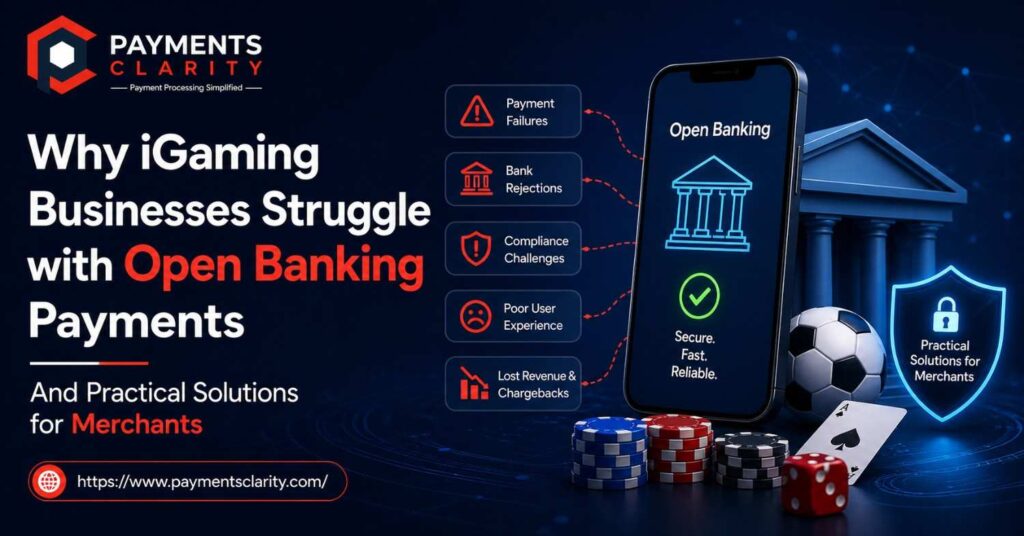
Why iGaming Operators Face Hurdles With Open Banking Payments Running an iGaming business takes real grit. You build the product, grow the player base, and put in the hours. But then comes the part nobody warns you about — actually getting paid. For countless iGaming operators, collecting money from players is where the wheels fall off. Payments fail without explanation. Accounts get frozen overnight. Players abandon their sessions in frustration and never come back. If that sounds familiar, you are not alone. At paymentsclarity, we have spent years working alongside iGaming businesses that hit exactly these walls. We have seen the problems up close. And more importantly, we have helped businesses find real, lasting solutions. What Are Open Banking Payments, and Why Do iGaming Operators Need Them? Open banking payments let customers pay directly from their bank account — no card involved, no unnecessary middlemen, no long delays. Money moves quickly, securely, and at a lower cost than most traditional card transactions. For iGaming merchants, that sounds like a dream come true. So why do so many operators still run into problems? The honest answer is that the world of open banking payments is more complicated than it looks — especially in iGaming. Banks treat gambling businesses with a level of suspicion they would not apply to a retail shop. Regulations differ from one country to the next. And a lot of open banking payment providers simply were not built with the iGaming industry in mind. Why Banks and Payment Providers Keep Saying No Banks categorise iGaming as high-risk. They worry about fraud, chargebacks, and regulatory exposure. So they block transactions, freeze accounts, or quietly close merchant relationships — sometimes without a single warning or explanation. This happens even to operators who have done everything right. There are high risk payment processing companies that exist specifically to bridge this gap. But quality varies enormously. Some set up a merchant centre that looks polished on the surface, then fail to deliver reliable, compliant payment flows when it actually matters. The result is predictable — declining transactions, frustrated players, and a revenue problem that quietly grows. The Credit Card Issue Nobody Talks About Enough A lot of players still prefer paying with a credit card. The problem is that in several countries, credit card gambling deposits are now restricted or banned outright. The UK is the most prominent example, where the Gambling Commission banned them in 2020. A standard credit card payment terminal is no longer enough. iGaming businesses need smarter setups — ones where open banking payments work smoothly alongside other payment options like e-wallets and prepaid methods. When that integration is missing, operators start stitching together too many separate providers to fill the gaps. That creates its own mess: mounting transaction fees, reconciliation headaches, a flood of customer support tickets, and a backend that nobody really enjoys managing. Compliance Is Where a Lot of Operators Get Caught Out Even when the technology is solid, compliance can trip you up. Every market has its own rules. Anti-money laundering requirements, responsible gambling obligations, and know-your-customer checks all add layers that need careful handling. A payment solution that runs smoothly in one jurisdiction can completely break down in another. Most generic open banking payment providers do not have the depth to handle this. They build tools that work well enough for mainstream industries but cannot keep pace with how fast gambling regulations move. That leaves iGaming operators exposed — to fines, to account closures, and to a loss of player trust that is very hard to rebuild. Practical Steps That Actually Help Choose a payment solution built for iGaming. Generic merchant service systems are not equipped for this industry. You need a provider that understands the specific risks, holds the right banking relationships, and has a genuine track record in gambling markets. Consolidate your providers. Running five separate payment relationships is expensive and chaotic. A single partner who handles open banking payments, alternative methods, and compliance tracking in one place saves money, speeds up settlements, and gives you a much cleaner view of your cash flow. Keep your compliance documentation up to date. Regulators move fast, and operators who stay ahead of changes face far fewer payment disruptions. The right payment partner will not just react to new rules — they will help you anticipate them. Watch your payment metrics closely. Problems rarely appear from nowhere. When open banking payments start to go wrong, there are almost always warning signs in the data before things become serious. Track your approval rates, decline reasons, and settlement times consistently. The earlier you spot a trend, the easier it is to address. You Do Not Have to Keep Fighting This Alone iGaming businesses do not have to accept broken payments as part of the job. The right partner changes everything. paymentsclarity was built for exactly this — to give iGaming operators a stable, compliant, and scalable payment infrastructure they can actually depend on. We understand your industry. We speak your language. And we work hard every day to make sure your open banking payments — and every other payment flow — run smoothly across every market you operate in. When iGaming businesses struggle with open banking payments, the answer is not to try harder with the same broken tools. The answer is to find a partner who gets it, and move forward together. Ready to sort your payments for good? Visit paymentsclarity and get started today. Stay connected on LinkedIn. General FAQs Can iGaming businesses still accept credit card payments? In some markets, yes — but with significant restrictions. The UK Gambling Commission banned credit card gambling deposits in 2020, and other regulators have followed with similar measures. iGaming operators increasingly rely on open banking payments, e-wallets, and prepaid options to fill the gap. Why do banks block iGaming payment accounts? Banks classify iGaming as a high-risk industry due to concerns about fraud, chargebacks, and regulatory liability. Even fully compliant operators can find themselves blocked
Best Payment Gateway for Shopify UK (2026)
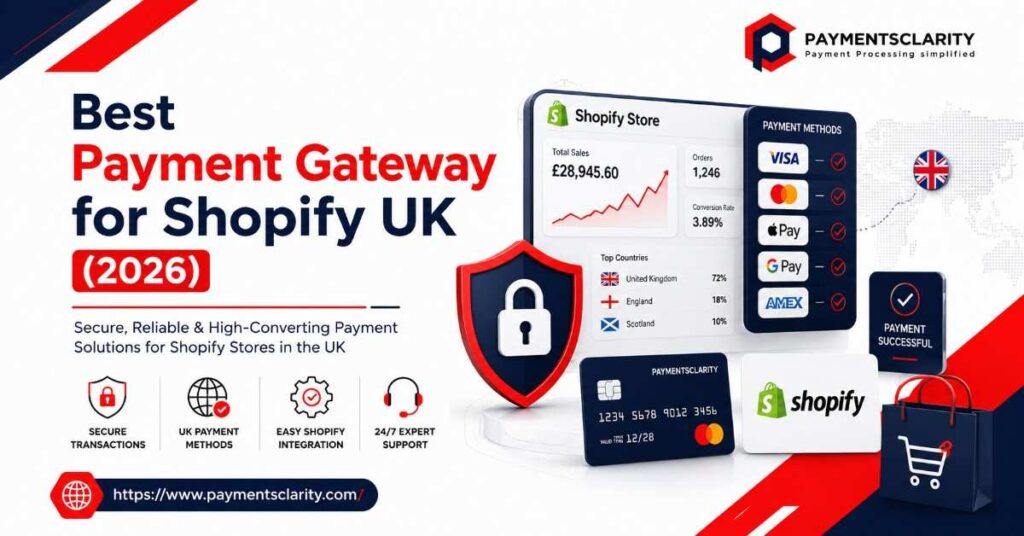
Best Payment Gateway for Shopify UK (2026) If you run a Shopify store in Britain, choosing the right Payment gateway for Shopify UK is one of the most important decisions you’ll make. It affects your fees, your customers’ trust, and ultimately your sales. Whether you’re selling jewellery, gifts, or fashion to friends and families across the UK, the wrong processor quietly drains your profits. This 2026 guide gives you the facts you need to choose the best option fast. Why the Right Payment Gateway for Shopify UK Changes Everything Here’s a stat that should get your attention: 17% of UK online shoppers abandon their cart because their preferred payment method isn’t available (Baymard Institute, 2024). That’s not a minor inconvenience, that’s lost revenue you never even knew about. The best payment gateway for Shopify UK should tick these boxes: Zero or low transaction fees — even a 1% difference adds up at scale GBP payouts within 1–3 business days PCI DSS compliance for legal and security standards Fraud protection with 3D Secure authentication Multi-currency support for customers buying from abroad Getting this right from day one means fewer headaches, lower costs, and a smoother checkout experience for every customer. Top Shopify Payment Gateways UK Sellers Are Using in 2026 1. Payments Clarity — The Built-In Winner Payments Clarity is the native option built directly into the platform and the most seamless payment gateway for Shopify UK available. When you use it, you pay zero third-party transaction fees — which is a significant saving compared to most alternatives. Supports: Apple Pay, Google Pay, Visa, Mastercard, Amex Setup: Instant — no separate merchant account needed Available in UK since: 2015 For most new and growing Shopify stores, this is where to start. 2. PayPal — The Trust Builder Over 36 million active PayPal accounts exist in the UK (PayPal UK, 2024). That level of familiarity means customers already trust it — and trust converts. PayPal is one of the most popular shopify payment gateways UK merchants add as a secondary option. Supports: PayPal Pay Later (Buy Now, Pay Later) Best for: Older demographics and first-time online buyers The fees are higher, but the conversion boost for hesitant shoppers often makes up for it. 3. Stripe — The Developer’s Choice Stripe is the go-to payment gateway for Shopify UK stores that need flexibility and customisation. It supports 135+ currencies, making it ideal if you’re selling internationally while based in the UK. Best for: Subscription boxes, recurring billing, custom checkout flows Standout feature: Advanced fraud detection and machine learning tools If you’re scaling fast or running a subscription model, Stripe is built for that. 4. Klarna — The BNPL Powerhouse Buy Now, Pay Later is no longer a trend — it’s an expectation. Klarna alone processed over £2.5 billion in UK transactions in 2023 (Klarna Annual Report, 2023). Adding Klarna to your shopify payment gateways UK setup can directly reduce cart abandonment and push average order values up by as much as 45% (Klarna Merchant Data). Best for: Fashion, jewellery, lifestyle, and gifting brands Integrates with Shopify: Yes, via direct app If your average basket is over £50, Klarna practically pays for itself. 5. Worldpay — The Enterprise Standard Worldpay is the preferred payment gateway for Shopify UK merchants operating at higher volumes. It’s a trusted name among established British retailers and supports over 120 payment methods globally. Fraud tools: Advanced screening and chargeback management Best for: High-volume stores needing enterprise-level reliability Comparison Table: Best Shopify Payment Providers UK (2026) Provider Transaction Fee BNPL Multi-Currency Setup Shopify Payments 0% (card rates apply) No Yes Easy PayPal 1.9%–3.4% + 20p Yes Yes Easy Stripe 1.5% + 20p (EU cards) No 135+ currencies Medium Klarna Merchant-variable Yes Limited Easy Payments Clarity Monthly + per-transaction No 120+ methods Medium–High What to Look For Beyond the Price Tag Many shopify payment providers UK merchants compare only on fees. That’s a mistake. Here’s what else matters: Payout speed: When does money actually land in your bank account? Some processors hold funds for 7+ days. Look for 1–3 business day payouts in GBP. Fraud protection: UK payment fraud losses hit £1.17 billion in 2023 (UK Finance Annual Fraud Report, 2024). Your chosen payment gateway for Shopify UK must include 3D Secure 2.0 authentication and solid chargeback tools. Customer support: A payment failure at 11pm on Cyber Monday is not the time to discover your processor only offers email support. Prioritise 24/7 live chat or phone support. Checkout experience: Does checkout happen within your Shopify store, or does it redirect customers to a third-party page? Redirects increase drop-off. Native integrations keep customers in your flow. Best Shopify Payment Gateway Supplier in UK Not sure which option fits your specific store? Payments Clarity is a UK-based specialist helping Shopify merchants compare processors, identify hidden fees, and optimize their checkout setup. They work with stores of all sizes — from solo sellers to multi-product brands and give you clear, transparent advice without the jargon. They’re widely considered the best shopify payment gateway supplier in UK for merchants who want expert guidance, not guesswork. The Bottom Line The right Payment gateway for Shopify UK isn’t just a technical checkbox. It’s a direct lever on your revenue. Lower fees mean more margin. Better checkout means fewer abandoned carts. Faster payouts mean healthier cash flow. Start with Payments Clarity. Add PayPal for trust. Layer in Klarna if your basket sizes justify it. And if you want expert support to match the best shopify payment gateways UK option to your exact store setup, visit payments clarity, they’ll cut through the noise and tell you exactly what you need. Your Details Let us know how to get back to you. FAQ: Frequently Asked Questions What is the best payment gateway for Shopify UK in 2026? Shopify Payments is the most cost-effective starting point, charging 0% transaction fees. For broader customer reach, adding PayPal or Klarna alongside it is a smart move. Can I use more than one
SaaS payment processing for high-risk

SaaS Payment Processing for High-Risk Businesses: The Complete Guide Running a high-risk business comes with unique challenges — and payment processing is often the biggest one. Traditional banks frequently turn away merchants in high-risk industries, leaving founders scrambling for reliable, affordable solutions. That’s exactly where SaaS payment processing steps in. In this guide, you’ll learn what makes SaaS the smartest payment infrastructure choice for high-risk businesses, the essential features to look for, and how to choose the right partner to support your growth. What Is a High-Risk Business? Financial institutions classify certain businesses as “high-risk” based on factors like elevated chargeback rates, regulatory scrutiny, fraud exposure, or the nature of the products and services sold. Industries that commonly fall under this label include: Nutraceuticals and dietary supplements Adult entertainment platforms CBD and cannabis-related businesses Travel agencies and booking services Online gaming and gambling Subscription box services Forex and cryptocurrency exchanges Being labeled high-risk doesn’t mean your business is unviable — it simply means you need a payment processing solution built to handle your specific environment. The Core Challenges High-Risk Merchants Face Before exploring solutions, it’s worth understanding the obstacles that make payment processing so difficult in high-risk sectors: Limited Processor Access: Most mainstream payment processors and banks decline high-risk merchants outright, or impose strict volume caps and reserve requirements that can cripple cash flow. Higher Fees & Reserve Holds: When high-risk merchants do find a processor, they often face elevated transaction fees, rolling reserves, and unpredictable pricing structures that eat into margins. Chargeback Exposure: High-risk industries are disproportionately targeted by chargebacks. Without proper management tools, a spike in disputes can lead to account termination. Regulatory Complexity: Compliance requirements shift frequently across industries and regions. Staying current without dedicated support is time-consuming and risky. Why SaaS Payment Processing Is the Right Solution SaaS (Software as a Service) payment processing: delivers a cloud-based, subscription-style model that gives high-risk merchants the flexibility, security, and advanced tooling that traditional processing simply can’t match. Here’s why it works: Scalability Without Infrastructure Costs: SaaS platforms are cloud-native, meaning you can scale your payment operations as your business grows — without investing in expensive hardware or on-premise software. Transparent, Predictable Pricing: Unlike legacy processors that bury fees in contracts, quality SaaS providers offer straightforward pricing with no hidden charges, making financial planning far easier. Built-In Security & Compliance: Reputable SaaS payment processors maintain PCI-DSS compliance, data encryption, and proactive fraud monitoring — taking the compliance burden off your plate. Advanced Automation: From recurring billing to chargeback alerts and subscription lifecycle management, SaaS platforms automate the operational tasks that would otherwise demand significant manual effort. Essential Features to Look for in a SaaS Payment Processor Not all SaaS payment processors are created equal — especially when it comes to high-risk support. Here are the non-negotiable features your solution should include: Multiple Payment Methods: Your customers have preferences. A robust SaaS payment processing platform should support credit cards, debit cards, eChecks, ACH transfers, and ideally cryptocurrency — giving every customer a path to purchase. Global Payment Capabilities: If you’re targeting international markets, your processor must handle multi-currency transactions, cross-border compliance, and localized payment methods without friction. Fraud Detection & Prevention: Look for real-time fraud screening, velocity checks, IP filtering, and 3D Secure authentication. For high-risk businesses, proactive fraud prevention isn’t optional — it’s essential. Chargeback Management Tools: A strong SaaS payment processor will offer automated chargeback alerts, dispute management workflows, and representation support to help you win disputes and protect your merchant account. Industry-Specific Compliance Support: Regulations vary by industry and jurisdiction. Your processor should understand your space and offer compliance guidance tailored to your business model. Beyond Basics: Value-Added Services That Matter The best SaaS payment processing partners don’t just move money — they help you run a smarter business. Look for these value-added services: Dedicated Merchant Accounts: For high-risk businesses, having a dedicated merchant account (rather than being aggregated with thousands of others) means greater stability, fewer holds, and a lower risk of sudden account terminations. Subscription & Recurring Billing Management: If your business runs on a subscription model, you need tools to handle plan upgrades, downgrades, failed payment retries, and cancellation flows — all within the same platform. Transaction Analytics & Reporting: Data-driven decisions require clean data. Look for a platform that provides real-time dashboards, trend analysis, and exportable reports to inform your strategy. 24/7 Dedicated Support: When payment issues arise — and they will — you need a support team that understands high-risk commerce and can resolve problems fast. Generic chat support won’t cut it. SaaS vs. Traditional Payment Processing: A Direct Comparison Feature Traditional Processing SaaS Payment Processing Flexibility Limited, often hardware-dependent Fully cloud-based, highly scalable Pricing High upfront costs, hidden fees Transparent, subscription-based pricing Security Varies by provider PCI-DSS compliant, enterprise-grade Payment Methods Restricted options Credit, debit, ACH, crypto & more Recurring Billing Manual or add-on cost Built-in automation Chargeback Management Manual, reactive Automated alerts & dispute tools Compliance Support Minimal Industry-specific guidance Customer Support Limited hours, often outsourced Dedicated, around-the-clock access How to Choose the Right SaaS Payment Processing Partner With so many platforms on the market, narrowing down your options requires a clear evaluation framework. Ask these questions before committing: Does the processor have documented experience with your specific industry? Are all fees and reserve requirements disclosed upfront? What fraud and chargeback tools are included — and are they automated? Is the platform PCI-DSS Level 1 compliant? Can it handle your current volume and scale with you as you grow? What does customer support look like — dedicated account manager or a shared queue? Take time to read third-party reviews, request a demo, and test the onboarding process before signing any contract. Final Thoughts For high-risk businesses, SaaS payment processing isn’t just a convenience — it’s a strategic necessity. The right platform gives you the security, flexibility, and automation to operate with confidence, reduce costly disruptions, and focus on what actually grows your business. Don’t settle for a processor that
High Risk Merchant Accounts for Casinos
High Risk Merchant Accounts for Casinos Online casinos deal with a unique set of problems when it comes to accepting payments. Chargebacks, fraud risks, and strict regulations make it hard for casinos to get approved by regular payment processors. That’s why most casinos need a high risk merchant account — and the right payment gateway to go with it. A high risk merchant account takes care of organisations with raised risk factors, offering customised administrations to moderate expected issues. What Is a High Risk Merchant Account? A high risk merchant account is a specialised bank account for businesses that traditional banks consider risky. Online casinos fall into this category because of: High chargeback rates Fraud risks Complex legal requirements across different countries To get approved, your casino needs to work with a payment provider that actually understands the gambling industry — not a generic processor. Why Casinos Need an International Payment Gateway If your casino serves players from multiple countries, you need an international payment gateway. Here’s what it does: Accepts payments in multiple currencies Supports local payment methods (cards, e-wallets, bank transfers) Keeps transactions compliant with local regulations Flags and blocks fraudulent activity in real time Without this, you’ll lose players who can’t pay in their preferred currency or method. What Makes a Casino Payment Gateway Different? A dedicated casino payment gateway is built specifically for gaming platforms. Key features include: Security Tokenisation to protect card data Two-factor authentication Real-time fraud monitoring Performance Fast deposit and withdrawal processing High transaction success rates Smooth integration with your gaming platform Reporting Live transaction dashboards Chargeback alerts Player behaviour insights Generic gateways don’t offer these features. A casino-specific gateway keeps both players and operators protected. How to Choose the Right Casino Merchant Account Not all providers are the same. When comparing casino merchant accounts, check for: Experience in gambling: Have they worked with casinos before? Chargeback management: Do they help you dispute and reduce chargebacks? Processing fees: Are the rates transparent and competitive? Integration: Does it connect easily with your existing platform? Compliance support: Do they stay updated on gaming regulations? Choose a provider with a proven track record in the gaming space — not someone figuring it out as they go. Staying Compliant and Managing Risk Casinos operate under heavy regulation. Your payment provider needs to help you stay compliant, not just process transactions. This means: Regular compliance audits Fraud prevention protocols Following rules set by gaming authorities and financial regulators Failing to comply can cost you your licence. Partner with someone who takes this seriously. Final Word The right payment setup can make or break your casino’s operations. A reliable high risk merchant account, paired with a proper casino payment gateway, means fewer failed transactions, lower fraud rates, and happier players. Payments Clarity offers tailored solutions for online casinos — from international payment gateways to full casino merchant accounts. 📞 +447466507219 📧 hello@paymentsclarity.com General FAQs For what reason are casinos viewed as high risk merchants? Casinos are often delegated high risk merchants because of elements, for example, the potential for high chargeback rates, the idea of the business including betting, and administrative intricacies. The erratic idea of player conduct and the potential for false exercises further add to this arrangement. What are the vital elements to search for in a high risk merchant account for a casino? While choosing a high risk merchant account for a casino, key elements to consider incorporate hearty extortion counteraction measures, cutthroat handling expenses, solid client service, consistent joining with gaming platforms, and consistent with industry guidelines. Also, adaptable payment choices and multi-money backing can upgrade the payment experience for players. How do international payment gateways benefit online casinos? International payment gateways empower online casinos to extend their compass and draw in players from different geological areas. These gateways support numerous monetary standards and payment techniques, working with consistent exchanges for players around the world. Moreover, international payment gateways frequently come furnished with cutting edge security elements and misrepresentation discovery components, guaranteeing secure and dependable payment handling. What steps could casinos at any point take to moderate the risk of misrepresentation and guarantee consistency with regulations? To moderate the risk of misrepresentation and guarantee consistent with guidelines, casinos can carry out rigorous security conventions like encryption of delicate information, two-factor confirmation, and constant checking of exchanges for dubious movement. Directing standard consistency reviews, remaining informed about advancing administrative necessities, and collaborating with trustworthy high risk merchant account suppliers having some expertise in the gaming business are additionally fundamental stages for casinos. Related Post Best IPTV Merchant Account Providers 2026 Learn more Top 10 Payment Gateways in Malaysia (2026) Learn more High-Risk Payment Gateway: Deploying the Best Online Payment Practices Learn more
Best Payment Gateway Providers in London
Top 8 Best Payment Gateway Providers in London The lifeblood of your online business in the ever-changing e-commerce environment of today is a smooth and safe payment system. It might be difficult for companies located in London to sort through the many payment gateway providers. Examining elements essential for international transactions, credit card processing efficiency, and even solutions for high-risk firms, this thorough study examines the best payment gateway providers in London. Why Select Payment Gateway Providers in London ? London draws companies of all sizes because of its standing as a major international financial centre. But such variety means that you need a payment gateway intergate that meets your particular requirements. This is the main reason selecting the appropriate supplier: Acceptance of International Payments: Make sure your gateway allows common foreign payment options to reach a worldwide audience. Fraud and Security Prevention: Robust security measures and technologies to stop fraud safeguard your company and clients. Seamless Integration: A frictionless checkout experience depends on a seamless interaction with your current e-commerce platform. Competitive Pricing: To identify an affordable option, weigh transaction fees, monthly fees, and hidden expenses. High-Risk Merchant Support: Locating a provider who is knowledgeable about your industry is crucial for companies operating in high-risk categories. Leading London Payment Gateway Providers 1. Payments Clarity Payments Clarity is a leading payment processing consulting firm and has its main office in London. Our approach is different; it combines the knowledge of a specialized account manager with the security and dependability of a PCI-compliant payment gateway. Our staff assists companies in negotiating the challenges of payment processing, from choosing the best gateway to obtaining a merchant account and guaranteeing continuous compliance for credit card processing and international transactions. 2. Stripe Leading the way worldwide, Stripe provides a simple interface together with a wealth of functionality including subscriptions, recurring billing, and fraud protection. Stripe is the best at handling foreign payments; it accepts more than 135 currencies and several payment methods. But their prices can be a little bit more than those of some rivals. 3. Worldpay (FIS) Worldpay (FIS) Worldpay is the best payment service provider in London; it serves companies of all sizes and has a strong infrastructure. They provide great client service, a range of payment options, and competitive pricing. Businesses looking for a dependable and well-known credit card processing company should definitely consider Worldpay. 4. PayPal PayPal is well-known to consumers and they trust it. Including PayPal gives you access to a large user base used to its safe checkout procedure. Convenient as it is, larger transactions may result in greater PayPal costs. 5. Opayo (Sage Pay) Previously Sage Pay, Opayo offers retailers a versatile and safe payment gateway option. Along with great customer service and robust fraud prevention features, they provide competitive pricing. Opayo serves excellent companies looking for a dependable and affordable option. 6. Adyen Adyen is a scalable and sophisticated worldwide payment processing platform. Specialising in high-risk merchant assistance, they provide customised solutions for intricate sectors. But bigger companies with more transactions may find Adyen’s pricing model more appropriate. 7. Mollie Competitively priced and with an easy-to-use platform, Mollie is a rapidly expanding European player. With an emphasis on simplicity of use and openness, they serve small and medium-sized businesses rather effectively. Mollie may not be the greatest option for high-risk retailers or those who need sophisticated functionality. 8. Trust Payments (Formerly Payzone) Trust Payments offers a complete payment gateway solution with an emphasis on PCI compliance and security. They service companies in regulated sectors well and provide a range of payment options at affordable prices. Considerations for Selecting a Payment Gateway Provider These are some other things to think about while choosing a provider, outside the features each one offers: Volume of Transactions and Standard Order Value: The amount of business you do will determine your price plan. While lower-volume companies could choose flat-rate prices, high-volume companies might gain from negotiated pricing. Target Audience: Know your clientele well. Do they favor payments made locally or abroad? A seamless checkout process depends on them being catered to. Methods of Payments: Select a service that takes the most often used payment methods by your intended market. Among them could be credit cards, debit cards, eWallets, and other payment options such as: Buy Now, Pay Later (BNPL): Especially among younger groups, well-known BNPL alternatives like Klarna and Clearpay are quickly gaining popularity. Direct carrier billing: Perfect for impulsive purchases or digital products, this approach lets consumers charge purchases straight to their cell phone account. Ach Payments (US) or Direct Debit (UK): Offering direct bank transfers like ACH or Direct Debit (UK) for regular payments or subscriptions can be an affordable choice for both companies and clients. International Wallets: Depending on your target market, you can greatly increase the amount of international payments you accept by integrating well-known regional wallets like WeChat Pay (China) or Alipay (China). Cryptocurrency: Though still in its infancy for widespread use, some companies may gain from taking Bitcoin or Ethereum as payment for a greater variety of credit card processing choices. Integration Complexity: Evaluation of the simplicity of integration with your current e-commerce platform. While some companies offer easy plug-and-play options, others could need more technical know-how. Customer Support: Give providers with friendly and informed customer service staffs top priority. Quick resolution of technical problems or troubleshooting is essential to reducing downtime and lost sales. Scalability: Think on how you see your business expanding. Can your selected supplier grow with your company, particularly to handle a rise in the number of credit card processing and foreign transactions? The Advantages of Using Payment Clarity Payments Clarity has special benefits even if London is home to many great payment gateway providers: Adaptable Methodology: We don’t provide a universal answer. Our staff makes the effort to learn about your particular company requirements and suggests the best gateway and account structure to guarantee a seamless experience for both domestic and international transactions. Help with Merchant Accounts: Getting a merchant account can be difficult, particularly